1997 | Roma | Italia
Emanuele Censi (Rome, 1997) is a visual artist living and working in Italy. His practice weaves together painting, illustration, and moving image into a coherent and recognizable language. After training in Graphic Design and Cinema, he graduated in Illustration for Publishing at the Academy of Fine Arts in L’Aquila, an experience that strengthened his focus on the image as a narrative and symbolic space.
His research centers on the body as a terrain of conflict and emotional tension, where intimate dimensions and cultural structures overlap. While maintaining anatomical recognizability, his figuration tends toward deformation and synthesis, generating ambiguous presences suspended between attraction and estrangement. Eroticism, archetypal iconographies, and mythological references are not illustrative quotations but critical devices through which he explores fears, desires, and collective neuroses.
At the core of his work is a reflection on symbolic constructions of masculinity and the power dynamics that run through the body. His images challenge sedimented identity models, questioning the ways in which gender, authority, and vulnerability are represented and internalized. Formally, Censi favors an essential language, often marked by sharp contrasts, monochrome fields, and a strong attention to line. This reduction amplifies the symbolic dimension of the works, placing them in an open, ambiguous space rather than a linear narrative, and building suspended situations where tension remains unresolved. Through a practice that oscillates between intimacy and archetype, he develops a coherent inquiry into the contemporary body as a fragile and political site, traversed by opposing forces and ever-shifting imaginaries.
03-09 Mar 2026
Vernissage
Tuesday 03 Mar 18:30-21:30
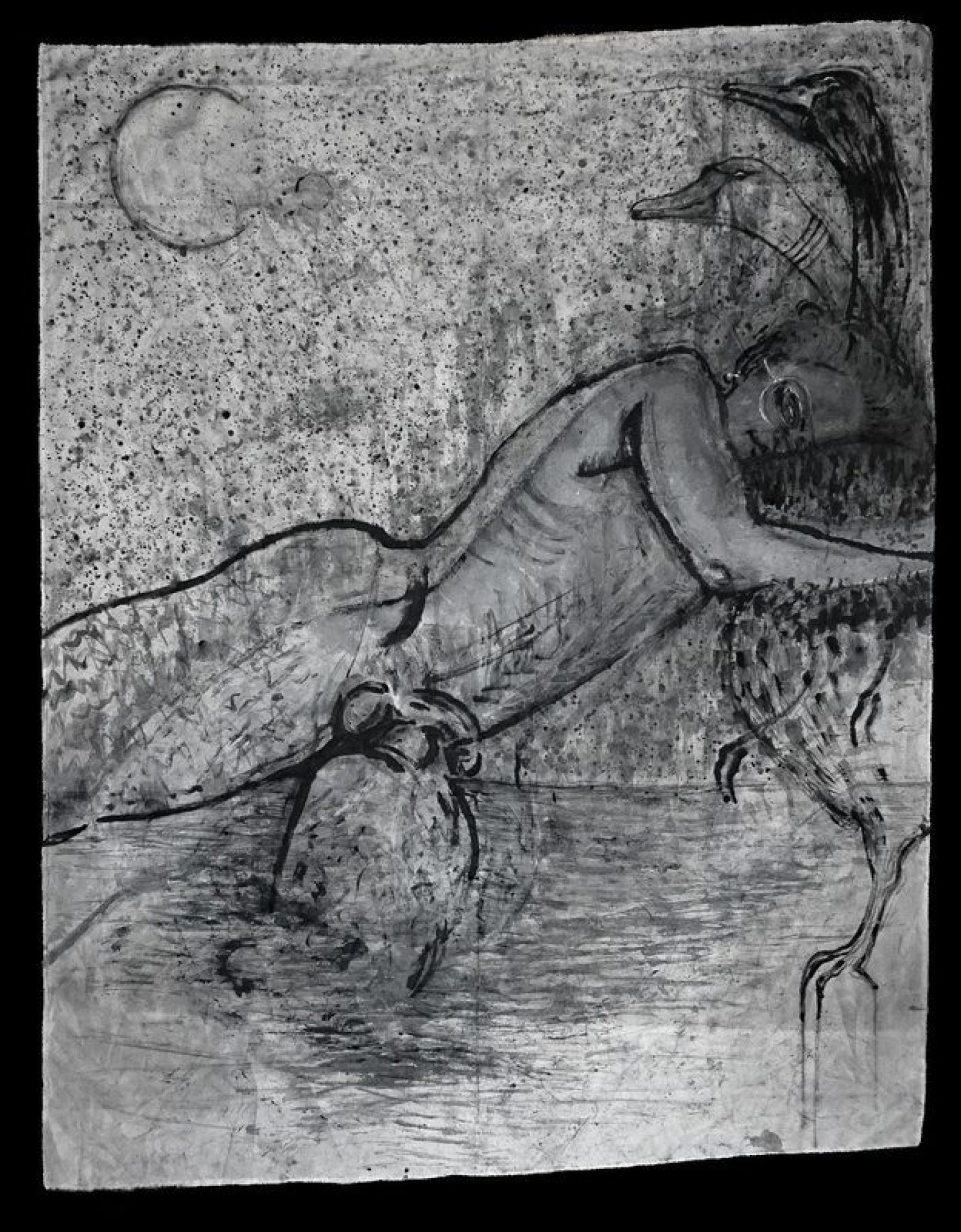
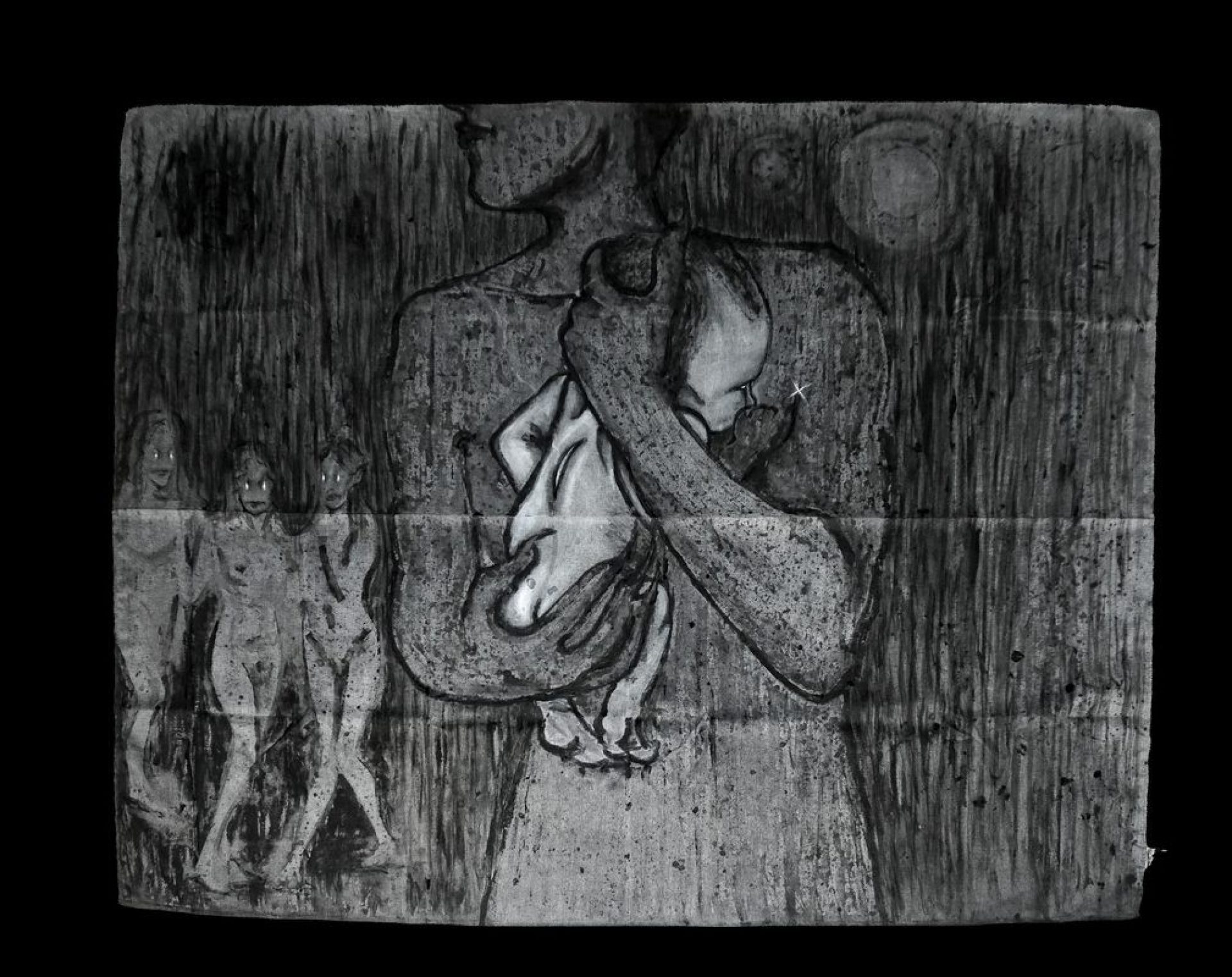
Self-Mythology is a visual and symbolic investigation of masculinity, built through monochrome painted sheets made on fabrics for domestic use. Black and white acrylic, applied without erasing the weave, turns the surface into a living element: the textile is not merely a support, but a body—skin that retains and returns the painterly gesture.
The project originates as a reflection on the construction of a personal, self-referential mythology: an imagery in which masculinity represents and celebrates itself, yet also becomes trapped in its own heroic narrative. Patriarchal archetypes—warrior, athlete, dominator, martyr—are isolated and reiterated until their fragility is revealed.
At its core lies the tension between Dionysian impulse and Apollonian instance: excess and loss of control on one side, discipline and restraint on the other. In the sheets this oscillation never resolves, producing suspended figures. The body—distorted and at times ambiguous in sexual traits—becomes a battleground: a compressed, unsettling erotic charge, more withheld than celebrated, that dismantles hegemonic rhetorics of masculinity from within and exposes their performative, almost theatrical nature.
The absence of color focuses the gaze on contrasts, silhouettes, and the relationship between solid and void, while the domestic material introduces a friction between intimacy and monumentality. Hung and not rigidly framed, the sheets engage the exhibition space as mobile, almost ritual presences: contemporary tapestries that invite the viewer to a physical, as well as visual, confrontation with a myth that cracks between the desire for control and the urge to surrender.